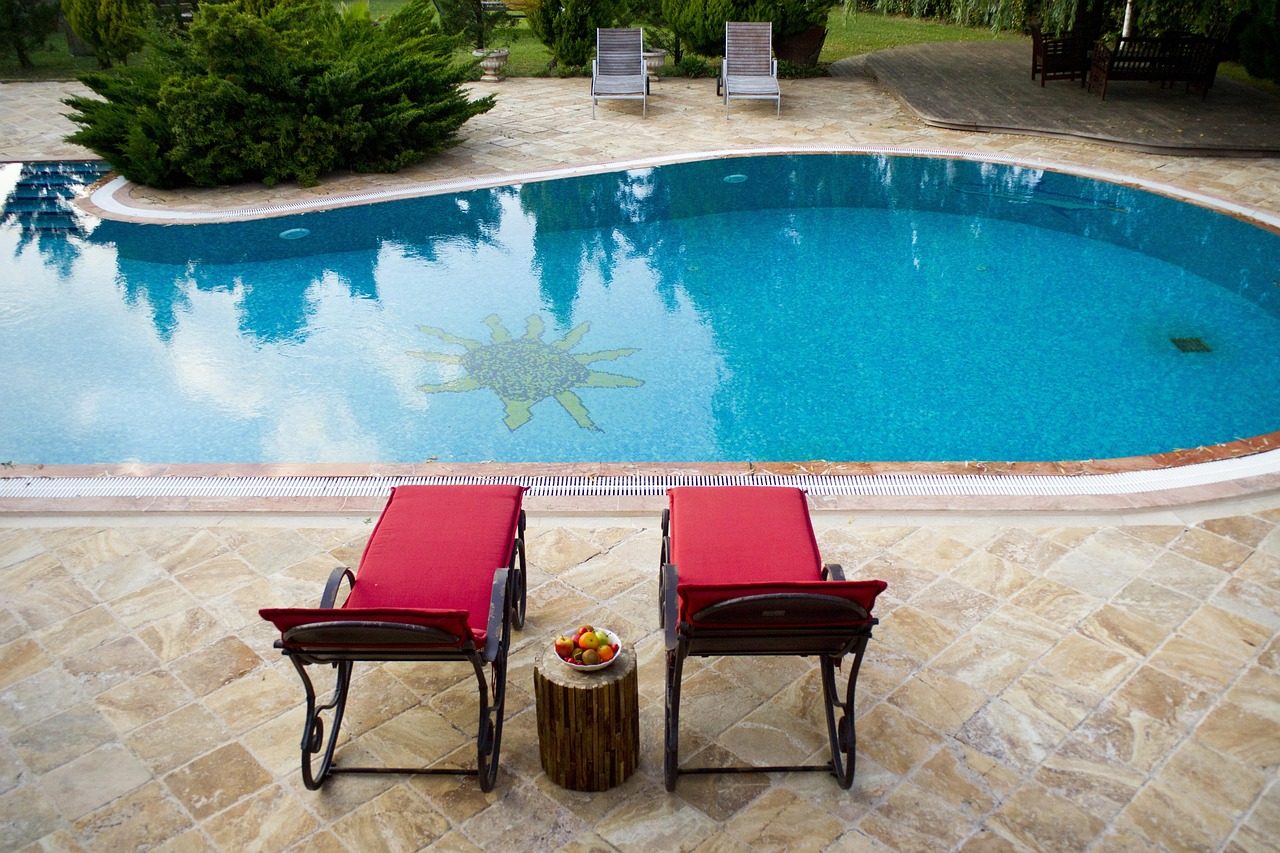
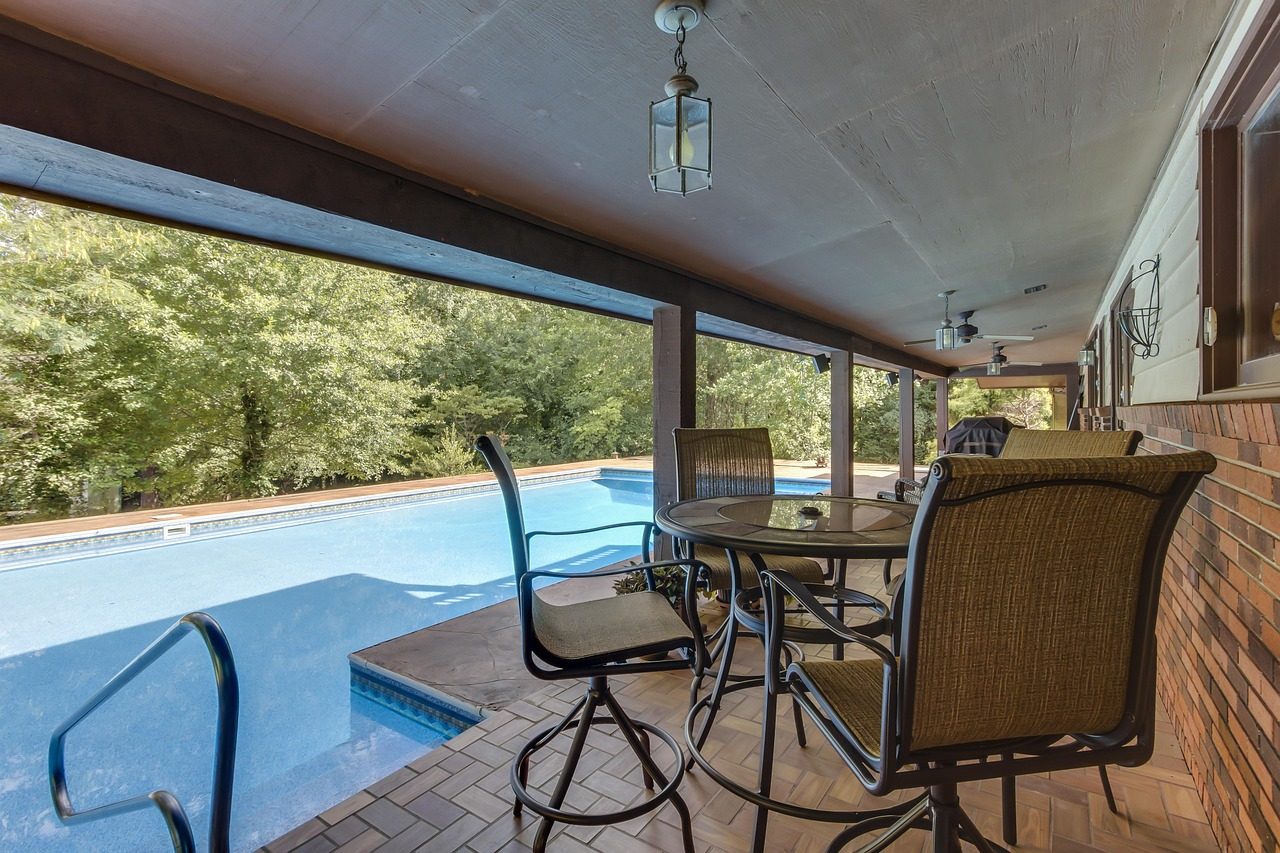
Lanai floor, flake system
The lanai slab stayed damp after rain and felt slick in bare feet. We ground it, added grip to the top coat, and used a sun-stable finish so the color holds by the screen door.

Grip comes from texture in the top coat, sized for bare feet: enough tooth to hold on a wet deck, not so much it tears up knees. The top must be sun-stable, since plain epoxy ambers fast outdoors.
Pool water, sunscreen, and leaf tannins all test a deck coat. A sealed, non-porous surface rinses clean with a hose. Cracks and old worn coats get ground and fixed first, same as indoors.
The lanai slab stayed damp after rain and felt slick in bare feet. We ground it, added grip to the top coat, and used a sun-stable finish so the color holds by the screen door.
The old deck coat had worn thin and got slick when wet. We ground it back, fixed two cracks, and laid a textured coat made for wet feet, sun, and pool water.
Tell us about the floor. We call back with a time to come look — the written price comes after the in-person look, before any work starts.
Rather talk? Call (407) 555-0139.
Texture is the point of the outdoor spec. We set grip for wet bare feet and test a sample patch feel with you at the estimate.
Yes, lanais are core outdoor work here. Screened shade helps cure and color hold; the damp check still runs first.
Thin, peeling deck coats come off and the deck is redone whole. Patches telegraph and lift at the seams. We show you the state of yours at the look.
Light colors run cooler underfoot. We steer pool decks to light blends for that reason and show samples in your own sun.
Cracks get chased and filled before coating. Cracks from slab movement can print back; we flag those in writing first.
Pick your floor and its size. The range updates as you go.
Add-ons your floor may need
Every floor is different. Slab condition moves the final number more than size does.
These are planning ranges, not a quote — your final price is confirmed after an in-person look, before any work starts.